Most electrical businesses know their profit once a year, when the accountant sends the numbers. By then it’s too late to fix the jobs that lost money. Job costing shows you the profit on every job while you can still do something about it.
What is job costing?
Job costing means tracking what each job actually costs and comparing it with the estimate and the price.
- Budget: what the estimate said the job would cost, in labour hours and materials
- Actual: what it really cost, from timesheets and purchases
- Price: what you charged the customer
- Profit: price minus actual cost
What does budget vs actual look like?
| Budget (estimate) | Actual | Difference | |
|---|---|---|---|
| Labour hours | 9.0 | 11.5 | +2.5 hours |
| Labour cost | $495.00 | $632.50 | +$137.50 |
| Materials | $640.00 | $655.00 | +$15.00 |
| Total cost | $1,135.00 | $1,287.50 | +$152.50 |
| Price ex GST | $1,850.00 | $1,850.00 | |
| Profit | $715.00 | $562.50 | −$152.50 |
| Margin | 38.6% | 30.4% |
Example figures, with labour costed at $55 an hour.
The job still made money, but 2.5 extra hours cut the margin by eight points. Repeat that over a year of jobs and it’s the difference between a good year and a stressful one.
Where do the actual costs come from?
- Labour: timesheets and the job timer in the field app. Hours need to be logged against the job, not just clocked on for the day.
- Materials: purchase orders to your wholesaler, van stock used on the job, and supplier invoices.
- Other costs: subcontractors, equipment hire, permits and disposal.
The easier it is for your team to log time against the job on their phone, the more accurate your job costing gets.
How do you handle variations?
When the customer asks for extra work, or you find something that wasn’t in the scope, don’t just absorb it. Price it as a variation, get it approved and add it to the job. Otherwise the job looks like it ran over budget when it really grew.
How should job costing change your quoting?
Job costing is how your estimates get better. After each job:
- Compare actual labour hours with the estimate, task by task.
- If a job type always runs over, update its Smart Bundle (preset job).
- If materials keep costing more, update your supplier price list.
- Check the margin per job type: which work is worth chasing?
Over a few months, your estimates come from your own real data, and that’s when quoting gets confident.
How does TradieTally do job costing?
TradieTally is built so you don’t have to set any of this up separately:
- Every job starts from the accepted quote, so the budget is already there.
- Timesheets and the job timer log labour against the job from the field app on iPhone, Android or web.
- Purchase orders and van stock record materials against the job.
- The job’s costs and financials tab shows revenue, actual cost, profit and margin, with labour and materials broken down.
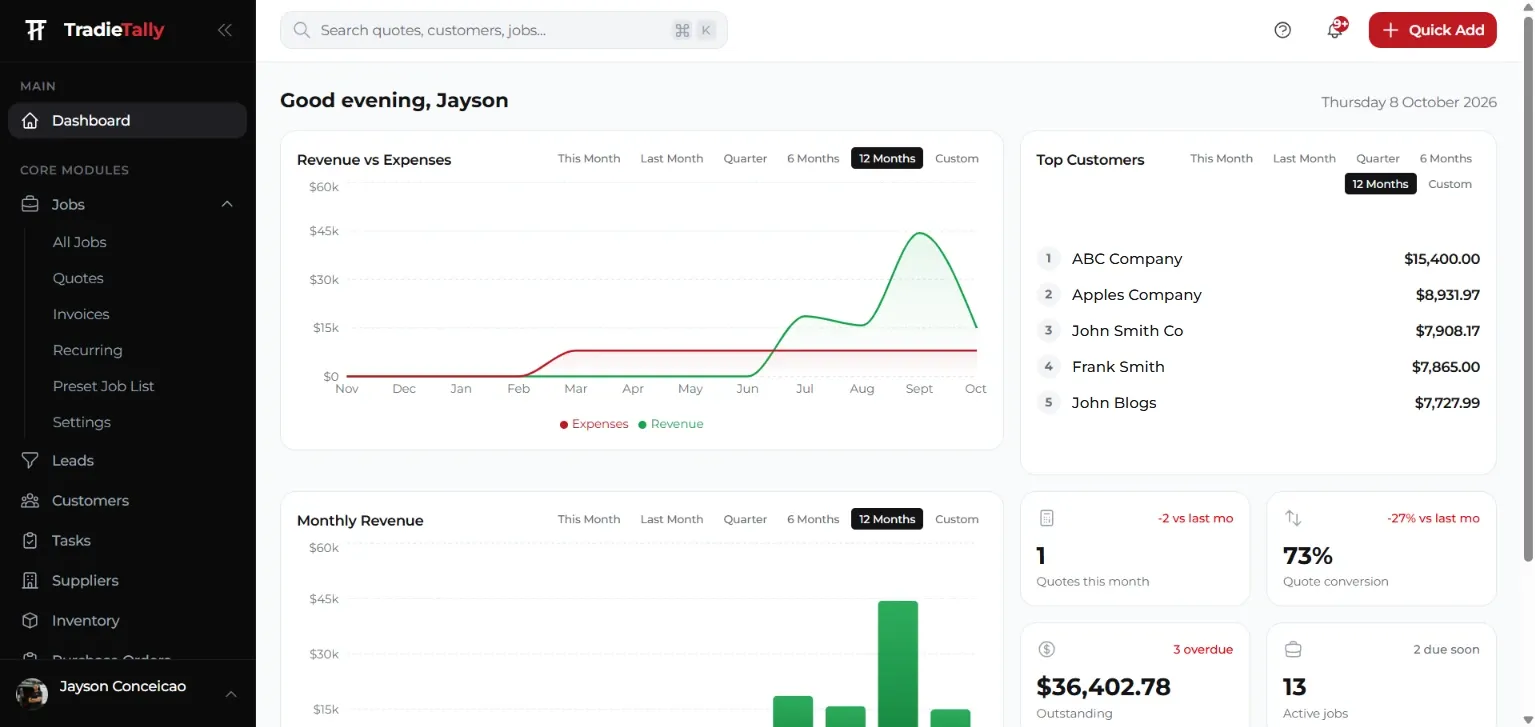
- The dashboard shows revenue and expenses across all jobs.
Because TradieTally is estimating priced for profit on your real numbers, not guessing, your job costing compares the job with a budget you can trust. See job management software for electricians or start a free trial.
Key takeaways
- Job costing compares each job’s actual cost with its estimate and price.
- Log labour against the job, not just the day, and record materials through purchase orders.
- Turn extra work into approved variations.
- Feed actuals back into your Smart Bundles so every quote gets more accurate.
- TradieTally tracks budget vs actual on every job automatically.